
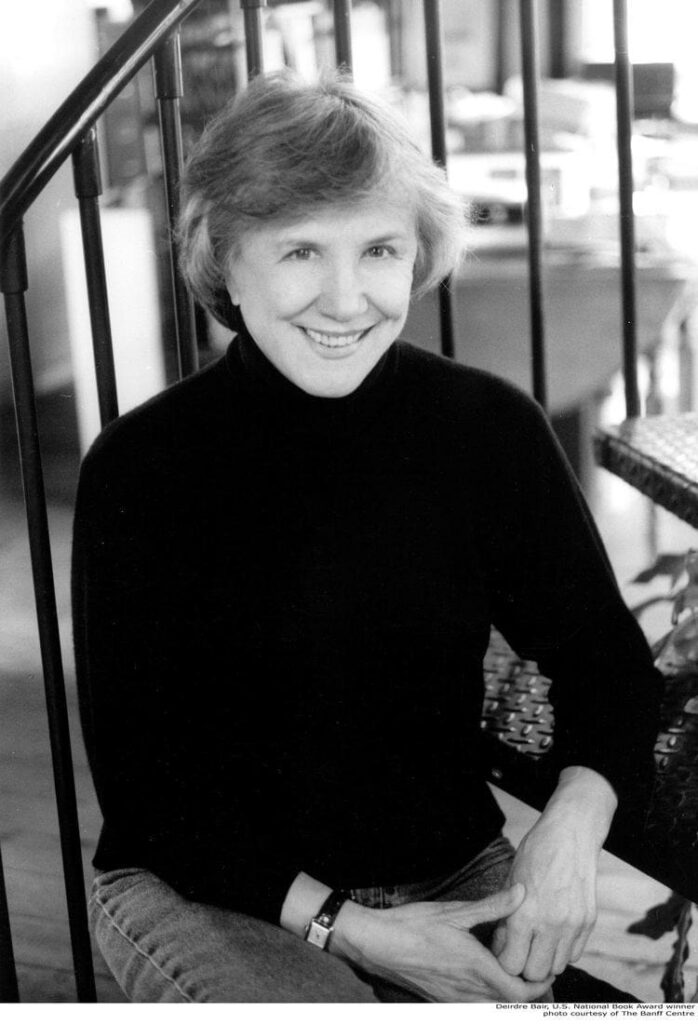
On 17 November 1971, in the cramped lobby of the Hôtel du Danube in Paris, Samuel Beckett said something to a graduate student he had just met — a sentence she would go on repeating for the rest of her working life:
I will neither help nor hinder you. My friends and family will assist you and my enemies will find you soon enough.
She was not, at that point, anybody. She had no book to her name and no standing in Beckett studies, which barely existed. She was a graduate student in comparative literature who had written to one of the most private writers alive and asked to be his biographer — and he had said yes, on those terms.
The biography that followed, Samuel Beckett: A Biography (1978), won the National Book Award in the paperback Autobiography/Biography category in 1981. It also made her, for some years, an unwelcome figure among Beckett’s academic admirers. Both things are worth holding at once.
Before the biographies
Bair was born in Pittsburgh on 21 June 1935. She took a BA in English at the University of Pennsylvania in 1957, then worked as a journalist — a stringer for Newsweek and a reporter for the New Haven Register — before returning to graduate school. She earned an MA in comparative literature at Columbia in 1968 and a PhD there in 1972.
That order matters more than it might appear. She learned to gather facts on deadline before she learned to write literary criticism, and the habit shows: her books are built from interviews and documents rather than from arguments about texts. She taught comparative literature at the University of Pennsylvania from 1976 to 1988, and held visiting appointments in Ireland, France, Germany, Sweden and Australia.
Four literary lives
Bair wrote biographies of four writers, in this order:
- Samuel Beckett: A Biography (1978) — written with Beckett’s tolerance rather than his cooperation, and the first substantial life of him.
- Simone de Beauvoir: A Biography (1990) — built on years of interviews with Beauvoir herself. A finalist for the Los Angeles Times Book Prize in 1991.
- Anaïs Nin: A Biography (Putnam, 1995) — a life whose primary source, Nin’s diaries, had already been edited by Nin into something other than a record.
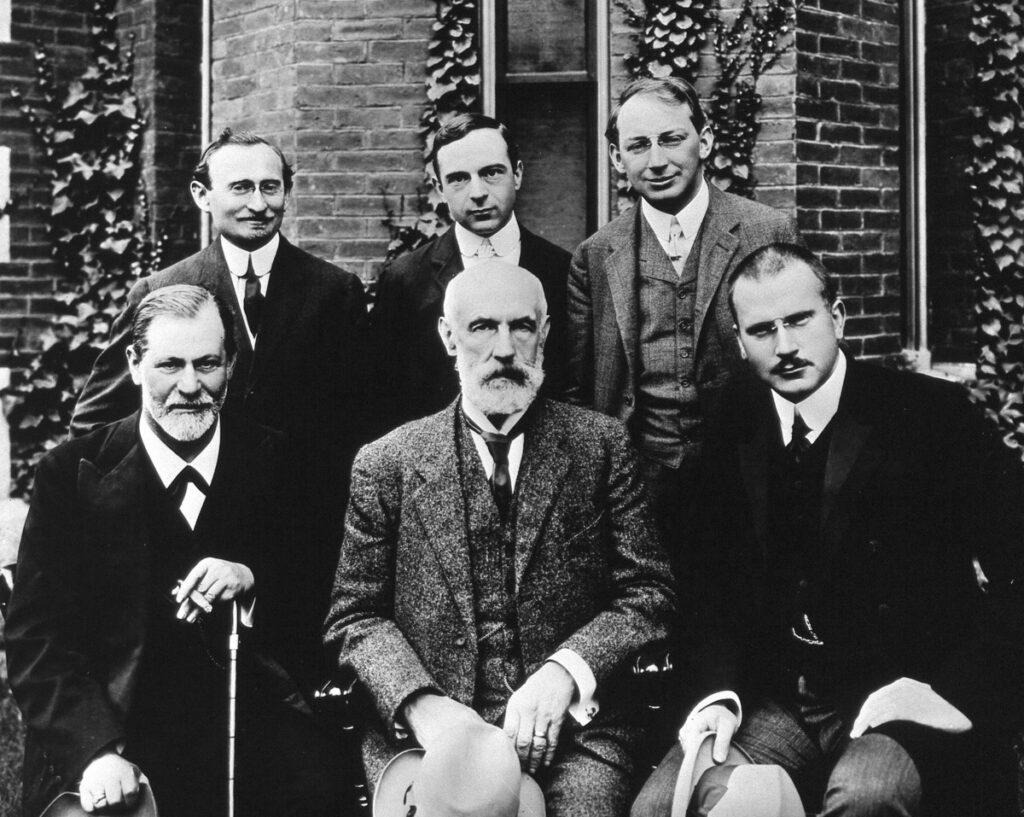
- Jung: A Biography (Little, Brown, 2003) — 881 pages, a finalist for the Los Angeles Times Book Prize and winner of the 2004 Gradiva Award from the National Association for the Advancement of Psychoanalysis.
She then moved outside literature entirely: Calling It Quits: Late-Life Divorce and Starting Over (2007), Saul Steinberg: A Biography (2012) on the New Yorker artist, and Al Capone: His Life, Legacy, and Legend (2016), the first full life of Capone written with the cooperation of his descendants.
Her last book was Parisian Lives (2019), a memoir about writing the Beckett and Beauvoir biographies. It was a finalist for the 2020 Pulitzer Prize for Biography. She died on 17 April 2020 in New Haven, Connecticut, aged 84. Her daughter, Katney Bair, gave the cause as heart failure.
How she worked, and what it cost her
Bair’s method was consistent across forty years: get to the people while they are still alive, record what they say, find the documents, and let the reader see the seams. She did not psychoanalyse her subjects. In the Jung biography — a book about the founder of analytical psychology — she is conspicuously unwilling to analyse Jung, which some reviewers took as a failure of nerve and others as the whole point.
That restraint is the recurring charge against her. Reviewers of several of her books complained of accumulation without argument: too much detail, too little interpretation, a life laid out rather than explained. It is a fair description. Whether it is a fault depends on what you want a biography to do.
The other recurring theme is more uncomfortable. In Parisian Lives she describes, at length and with names, the condescension she met as a young woman writing about famous men — the assumption that she must have slept with Beckett, the senior scholars who told her the work was not hers to do. That book is partly a record of a research method and partly an account of what it was like to be the person carrying it out.
Awards
- 1981 — National Book Award, paperback Autobiography/Biography, for Samuel Beckett
- 1991 — Los Angeles Times Book Prize, finalist, for Simone de Beauvoir
- 2004 — Los Angeles Times Book Prize, finalist, for Jung
- 2004 — Gradiva Award, National Association for the Advancement of Psychoanalysis
- 2020 — Pulitzer Prize for Biography, finalist, for Parisian Lives
What is still unclear
Two things about Bair’s career are frequently asserted and rarely sourced. The first is the exact date of her first letter to Beckett; accounts differ, and Parisian Lives is the only detailed record we have of it, written more than forty years after the fact. The second is the extent of Beauvoir’s control over what went into the 1990 biography. Bair discusses it, but the archive that would settle it is not fully open.
Where this site cannot verify something, it says so rather than filling the gap.
This site is an independent reader’s project about Deirdre Bair’s books and the lives she wrote about. It is not affiliated with Deirdre Bair, her family, her estate, or her publishers.