
For most of the twentieth century the Carl Jung Red Book sat in a bank vault in Zurich, and almost nobody had read it. Jung himself called it Liber Novus.
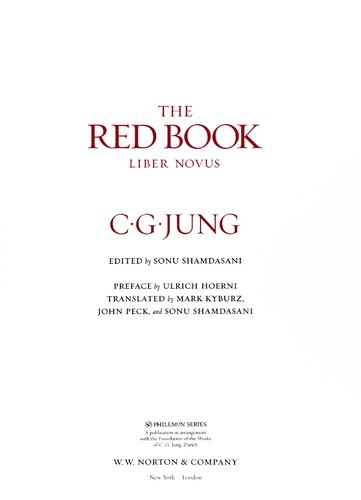
It appeared in bookshops on 7 October 2009: an oversized facsimile, published by W. W. Norton, edited and co-translated by the historian Sonu Shamdasani. Jung had been dead since 1961. The book he had worked on for roughly sixteen years reached the public forty-eight years after the man who wrote it.
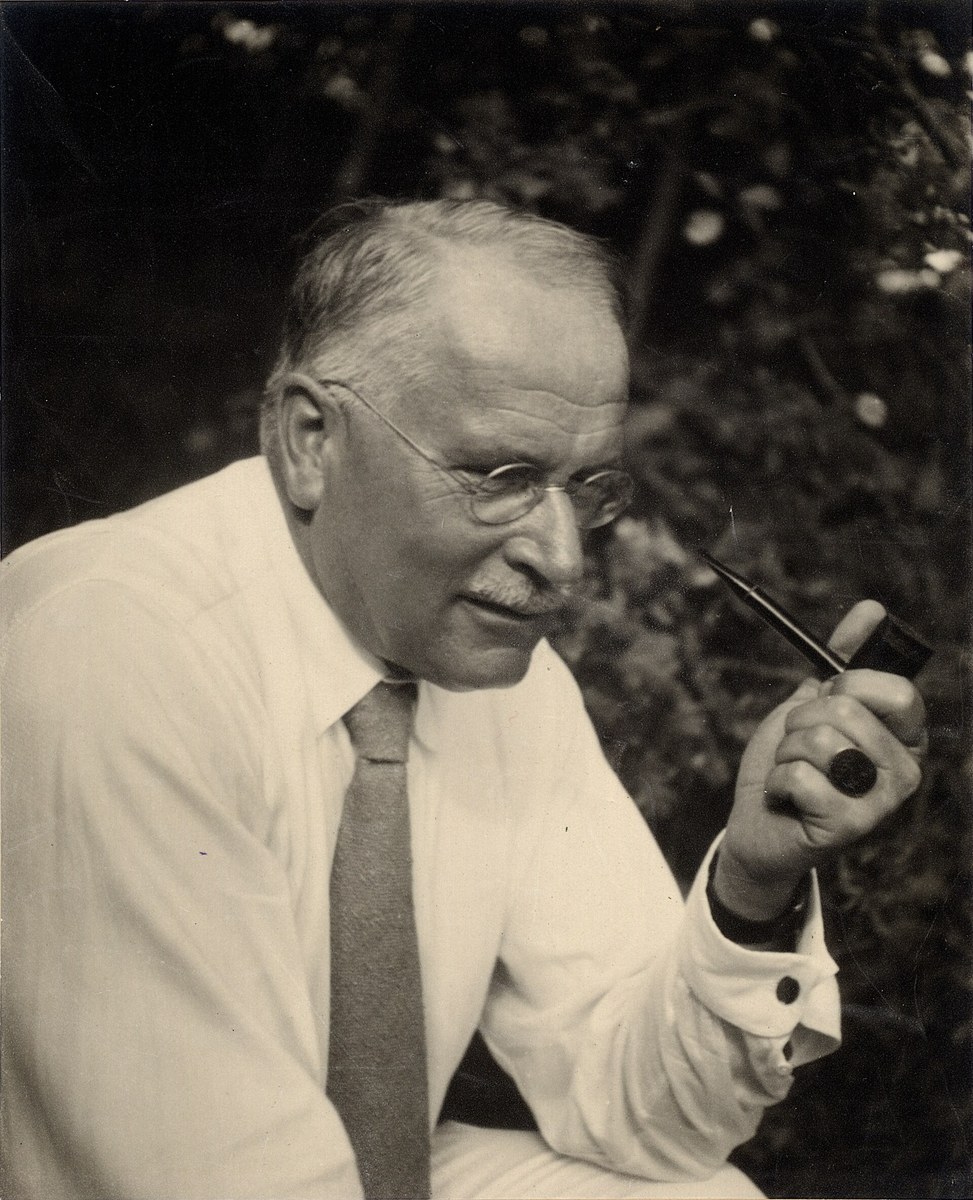
What it physically is
Jung’s own title for the work was Liber Novus — “New Book.” The name everyone uses instead comes from its binding: red leather.
It is not a manuscript in the ordinary sense. Jung composed the text between about 1914 and 1930, then transcribed it into a large folio volume in a deliberately antique calligraphic hand, and illuminated it with his own paintings: mandalas, figures, landscapes that are not quite landscapes. It looks less like a psychiatrist’s notebook than like a medieval illuminated manuscript made by someone who had studied how medieval illuminated manuscripts were made.
That physical fact matters when you read it. Whatever else Liber Novus is, it is an object Jung laboured over for years, in a form he chose on purpose.
What is in it
The material began in the period after Jung’s break with Freud, when he undertook what he later described as a deliberate confrontation with his own unconscious. He recorded the visions and inner dialogues that followed in a set of small notebooks — the Black Books — and then worked that raw material into the elaborate text and images of Liber Novus.
The book is where the concepts he later published in academic language first appear in their original, undomesticated form. Readers coming to it from the Collected Works often find the experience disorienting for exactly that reason: the ideas are recognisable, but the register is not scholarly at all.
Why the Carl Jung Red Book stayed in the vault
Two fears kept it there, and they were not the same fear.
Jung’s own worry, by most accounts, was that readers would take the book as evidence that he had lost his mind — that a psychiatrist who recorded his own visions at this length would not be read as a psychiatrist afterwards. His estate’s concern, held long after his death, was closely related but more institutional: that publishing it would damage his standing as a scientist.
So the manuscript went into a safe deposit box, and for decades the family declined to release it. Access was granted rarely and narrowly. The decision to publish came only after long negotiation, and the edition that resulted took Shamdasani years of work, supported by the Philemon Foundation, which exists to publish Jung’s unpublished works.
The biography written without it
Here is the part that is usually left out of accounts of the Red Book, and it is worth stating plainly.
The standard English-language life of Jung — Deirdre Bair’s Jung: A Biography, 881 pages, Little, Brown, 2003 — was researched and written by someone the family would not allow to read the Red Book.
Bair worked in the Jung papers held at the ETH in Zurich under the standard terms offered to scholars. What she was not given was the family archive. Reported among the material closed to her: Jung’s private diaries, his mother’s diaries, and roughly a thousand letters between Jung and his wife Emma.
So the biography that shaped the English-speaking picture of Jung for a generation was written with a hole at its centre — and the person who edited the document in that hole became, six years later, one of the biography’s sharpest critics.
The Shamdasani dispute
Shamdasani published a detailed critique of Bair’s biography, working through specific claims and identifying what he considered errors of fact and interpretation. Several of his objections turn on precisely the point above: that material in the family archive contradicted assertions Bair had made, and that this would become clear once the Red Book appeared.
Bair replied publicly, in an open letter addressed to him.
This site does not adjudicate that exchange. It is worth knowing about for a practical reason: if you are reading Bair’s Jung today, you are reading a book written before the most important primary source was available, by an author who was refused access to it, and which a scholar with that access has publicly disputed. None of that makes the biography worthless. It does mean it should be read as one account rather than as the settled record.
How to approach it
- The full facsimile edition reproduces the pages as objects, with the paintings, alongside translation and Shamdasani’s apparatus. It is large, heavy and expensive, and it is the version that shows you what the book actually is.
- The Reader’s Edition carries the text and the notes without the facsimile plates. Cheaper, portable, and a reasonable way in — but the images are not decoration, and reading the text alone gives you a partial object.
- Do not start here if you are new to Jung. Memories, Dreams, Reflections or Modern Man in Search of a Soul give you the vocabulary first. Liber Novus assumes you already have it.
Where to check this for yourself
Nothing on this page should be taken on trust. The publication history and editorial apparatus are documented by the Philemon Foundation, and Pacifica Graduate Institute maintains a library guide to the Red Book that lists the editions and the secondary literature. Where this site departs from those sources, it says so.
What is still unclear
Two things, at least.
The first is how much of the Black Books material Jung reworked, softened or dropped on the way into Liber Novus. The notebooks were published separately and later; comparing the two is scholarly work that is still in progress.
The second is the internal history of the family’s decision-making across five decades — who argued for publication, who against, and when the balance shifted. Accounts of this exist, but they are partial and they come from interested parties.
Where this site cannot verify something, it says so rather than filling the gap.
Leave a Reply